

“In 2019, John Durnell sued Monsanto in Missouri state court, alleging that he had used Monsanto’s Roundup products for about 20 years and that they had caused his non-Hodgkin’s lymphoma,” Supreme Court Justice Brett Kavanaugh wrote in today’s Supreme Court of the United States opinion.
Durnell, a Missourian who used Roundup (which contains glyphosate as its primary ingredient) for decades, said the product should’ve been labeled with a cancer warning.
Today, the court sided with Monsanto, writing that federal law “require[s]” Monsanto to sell Roundup “without a cancer warning,” because the Environmental Protection Agency “has repeatedly evaluated glyphosate and repeatedly concluded that glyphosate is not likely to cause cancer.”
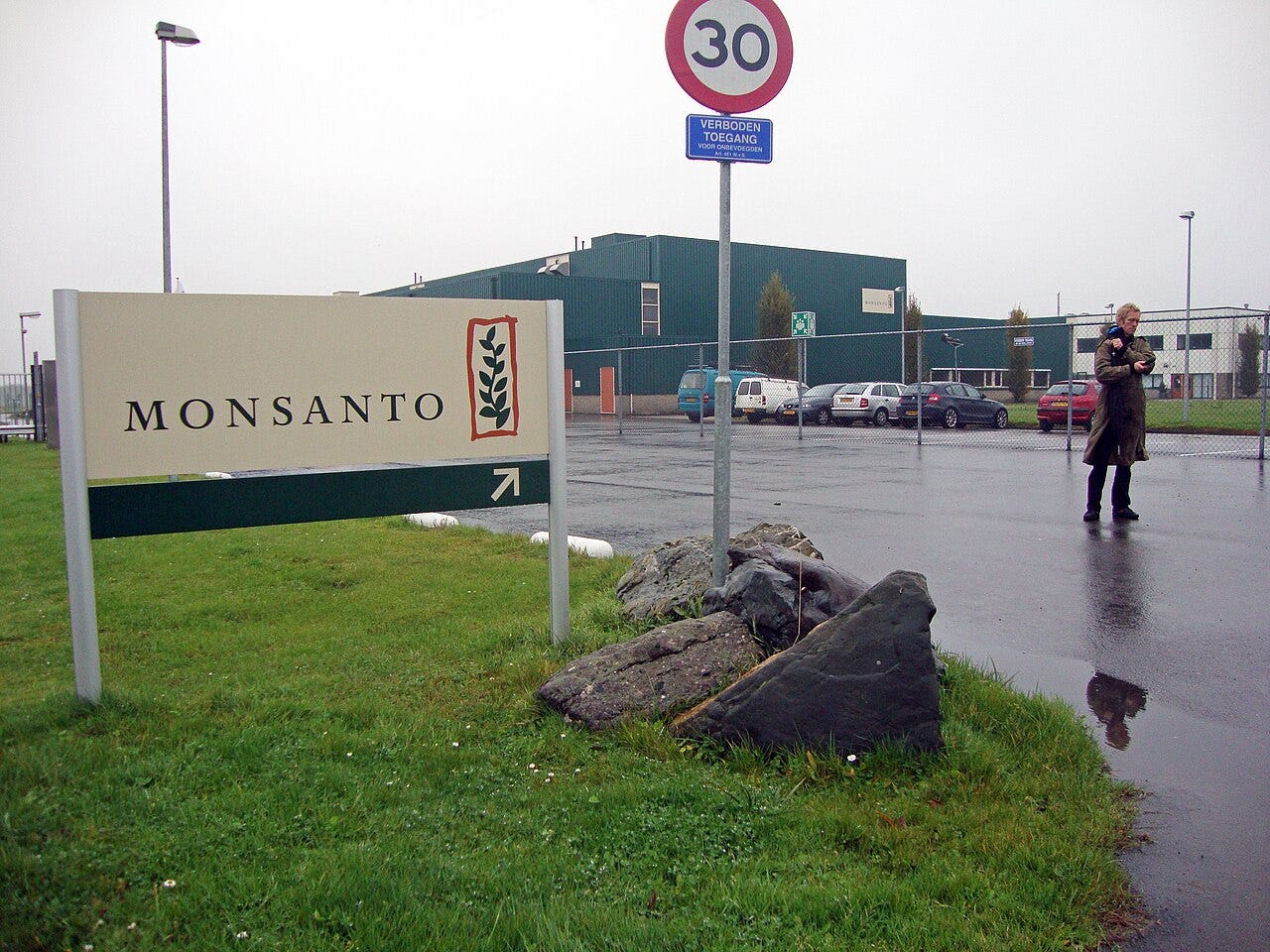
What has the EPA based its conclusion on?
Well, EPA has shared the papers that form the basis of its conclusion, and one of the papers is “Williams, G. M., et al. (2000). ‘Safety Evaluation and Risk Assessment of the Herbicide Roundup and Its Active Ingredient, Glyphosate, for Humans.’ Regulatory Toxicology and Pharmacology 31(2): 117-165,” a paper that was retracted last year because it was ghostwritten by Monsanto. Historian of science Naomi Oreskes and researcher Alexander Kaurov, who called for the retraction of that paper, are calling for the retraction of two more glyphosate safety papers due to more alleged ghostwriting and non-disclosure.
Just a few months ago, Oreskes and I specifically wrote on the connection between glyphosate and non-Hodgkin lymphoma:
Research by environmental advocacy group Food & Water Watch shows that 60% of counties “that spray the most glyphosate” have non-Hodgkin lymphoma “incidence rates above the national average.” In Iowa, that number is closer to 82%. A 2019 meta-analysis of Agricultural Health Study data found that people with the highest cumulative glyphosate exposure face a 41% higher relative risk of developing non-Hodgkin lymphoma compared to those exposed to low level or no glyphosate.
The International Agency for Research on Cancer disagrees with EPA and classifies glyphosate as “probably carcinogenic to humans.”
What does the ruling in Monsanto v. Durnell mean?
There’s a lot more nitty-gritty in this case about the Federal Insecticide, Fungicide, and Rodenticide Act and what labels should shield companies from in the court of law.
But the TL;DR is this: If you get cancer from a pesticide that the EPA reviewed and doesn’t require a cancer warning for, you can’t sue that company. So what can you do? The High Court says you should petition the EPA. A multiyear side project while you’re getting chemotherapy infusions.
In her dissent opinion, Supreme Court Justice Ketanji Brown Jackson wrote that, “the effect of the majority’s interpretation is both remarkable and regrettable, for it unjustifiably closes the courthouse doors to state tort plaintiffs like Durnell.”
Bayer, which acquired Monsanto in 2018, wrote that the ruling is, “good for science, farmers, and industries that depend on regulatory clarity for innovation.”
Disclosure: Oreskes was my undergraduate thesis advisor and I work as her research associate. She did not review this article prior to publication.
John Robert’s was accurate when he stated that SCOTUS wasn’t political. They’re only capitalists open to the highest bidder!
This ruling is an outrage!